


What Battery Technologies Are Used in Industrial Energy Storage Systems
For factories facing high electricity bills and frequent power demand peaks, choosing the right battery technology can make a major difference in energy costs and system performance. Commercial and industrial battery energy storage systems allow businesses to store electricity and use it when needed, but not all batteries offer the same service life, efficiency, or safety characteristics.
Industrial storage options include lithium-ion batteries such as LFP and NMC, established lead-acid standby systems, and specialised technologies such as flow and sodium-sulfur batteries. Sodium-ion is an emerging stationary-storage option. These technologies are not equally common or interchangeable in commercial and industrial projects. This article explains how these battery technologies differ, where they work best, and what businesses should consider before selecting a storage solution.
What Battery Technologies Are Used in Industrial Storage
Industrial battery storage uses electrochemical reactions to store electricity and release it when power is needed. The battery chemistry determines important performance characteristics, including energy density, cycle life, thermal stability, and maintenance requirements. Modern commercial and industrial battery energy storage systems commonly use lithium-ion batteries, especially LFP technology, because they can support regular charging and discharging over extended operating periods.
The IEA Global Energy Review 2026 reports 108 GW of new battery storage capacity in 2025, up 40% from 2024, with LFP accounting for around 90% of deployments. These figures cover the global battery-storage market, including utility-scale systems; they are not market-share measurements for C&I storage alone. However, other technologies remain important for applications requiring high energy density, occasional backup power, or extended discharge duration.
The main options are explained below.
Lithium Iron Phosphate LFP Batteries
Lithium iron phosphate batteries use LiFePO4 as the cathode material. Lithium ions move between the cathode and anode during charging and discharging. LFP is one of the most widely used battery technologies in industrial stationary energy storage.
Its main characteristics include:
Long cycle life: Designed for repeated charging and discharging, making LFP suitable for daily energy management. Thermal stability: The phosphate-based cathode structure offers greater thermal stability than many nickel-rich lithium-ion chemistries. Energy efficiency: LFP systems can deliver high round-trip efficiency, although actual performance depends on the inverter, cooling system, and operating conditions. Lower material cost: LFP does not require nickel or cobalt in its cathode material.
Modular installation: LFP cells can be integrated into battery modules, cabinets, and containerized energy storage systems. The nominal voltage of an LFP cell is approximately 3.2 V. Multiple cells are connected to provide the voltage and energy capacity required by an industrial storage system. Actual cycle life depends on cell design, temperature, depth of discharge, charging rate, and the remaining-capacity threshold used in testing. HiTHIUM's ESS Cell 314Ah is an LFP product with a published nominal cycle rating of at least 13,000 cycles. This cell figure must be assessed with its test conditions and should not be used as an installed-system lifespan guarantee.
Businesses can explore HiTHIUM energy storage battery cells to review capacity, cycle-life ratings, and other technical specifications. Best suited for: Manufacturing plants, commercial buildings, solar energy storage, peak shaving, and industrial facilities with frequent charging and discharging.
Nickel Manganese Cobalt NMC Batteries
NMC batteries are another type of lithium-ion battery. Their cathodes contain nickel, manganese, and cobalt in different proportions. Their main advantage is high energy density, which allows more energy to be stored within a smaller volume or lower weight. A typical NMC cell has a nominal voltage of approximately 3.6-3.7 V, compared with approximately 3.2 V for an LFP cell. NMC batteries are useful when installation space or equipment weight is especially important.
However, industrial buyers must also consider thermal management, battery aging, material costs, and safety design. For stationary applications with enough installation space, higher energy density does not always lead to lower total project costs. Best suited for: Space-constrained energy storage installations, mobile industrial equipment, and applications where system weight is a major design factor.
Lead Acid Batteries
Lead-acid batteries use lead-based electrodes and sulfuric acid electrolyte to store electrical energy. They have been used for decades in backup power systems, emergency lighting, telecommunications, and uninterruptible power supply (UPS) equipment.
A single lead-acid cell has a nominal voltage of approximately 2 V.
The main advantage of lead-acid technology is its established manufacturing base and relatively low initial cost. However, frequent deep discharge can reduce battery life. Lead-acid systems also tend to have lower energy density than lithium-ion alternatives. For industrial facilities that discharge batteries every day, replacement costs and usable capacity must be considered carefully. Best suited for: Emergency backup, standby power, and applications with relatively infrequent discharge cycles.
Vanadium Redox Flow Batteries
Vanadium redox flow batteries store energy in liquid electrolytes held in external tanks. Pumps move the electrolytes through an electrochemical cell stack during charging and discharging. Unlike conventional lithium-ion batteries, flow battery systems can adjust energy capacity and power capacity through different system components. Larger electrolyte tanks can increase stored energy, while the cell stack determines power output. This makes flow batteries suitable for projects requiring longer discharge duration.
However, their tanks, pumps, piping, and supporting equipment require additional installation space and maintenance. Best suited for: Industrial microgrids, renewable energy integration, and selected long-duration storage projects.
Sodium Sulfur NaS Batteries
Sodium-sulfur batteries use sodium and sulfur as active materials.
Conventional sodium-sulfur systems operate at elevated temperatures, requiring dedicated insulation, heating equipment and thermal controls. Sodium-sulfur batteries have been used in stationary storage applications where several hours of energy discharge are required. However, their operating temperature and maintenance needs must be considered when comparing them with room-temperature battery technologies. Relevant application: Specialised stationary and industrial projects where the selected supplier can demonstrate suitable operating, maintenance and safety performance.
Sodium Ion Batteries
Sodium-ion batteries use sodium ions instead of lithium ions to transfer charge between electrodes. Their operating principle is similar to lithium-ion batteries, but they use different electrode materials. Sodium is widely available, making sodium-ion technology a potential option for diversifying battery supply chains. The performance of sodium-ion batteries depends on their specific cathode and anode materials.
Key considerations include:
Cell-level and system-level energy density
Cycle life under actual operating conditions
Low-temperature charging and discharging performance
Manufacturing maturity and product availability
Total system cost and warranty support
Sodium-ion technology is moving into commercial stationary storage applications, but buyers should evaluate the specifications of each product rather than assume all sodium-ion batteries perform alike. Relevant application: Emerging stationary-storage projects with a validated product and complete system proposal. Do not assume sodium-ion has the same availability, warranty history or field experience as established LFP C&I systems.
Comparison of Battery Technologies for Industrial Storage
Battery technologies differ in how they store energy, how often they can be cycled, and what operating conditions they can support. The following comparison helps industrial buyers identify which options deserve further evaluation.
Battery Technology | Main Advantage | Main Limitation | Typical Application |
LFP | Long cycle life and good thermal stability | Lower energy density than NMC | Daily cycling, peak shaving, solar storage |
NMC | High energy density | Higher thermal management demands | Space-limited storage |
Lead-acid | Lower upfront cost and established supply | Lower energy density and deep-cycle limitations | Emergency backup and UPS |
Vanadium flow | Flexible energy capacity and long-duration operation | Larger footprint and additional mechanical equipment | Industrial microgrids |
Sodium-sulfur | Suitable for multi-hour stationary storage | High operating temperature | Long-duration stationary projects |
Sodium-ion | Potential material and supply-chain advantages | Performance and commercial maturity vary | Emerging industrial storage applications |
Which technology is most suitable?
For industrial facilities that charge and discharge batteries daily, LFP is often a strong option because of its cycle-life characteristics, thermal stability, and competitive cost. For projects where energy density is especially important, NMC may deserve consideration. Flow batteries may be useful for applications requiring several hours of discharge, while lead-acid batteries remain relevant for selected standby applications. The final decision should depend on operating requirements rather than battery chemistry alone.
How Battery Technologies Match Different Industrial Energy Storage Applications
Industrial facilities have different electricity consumption patterns. A battery system that works well for a warehouse may not be the best choice for a manufacturing plant or remote mining operation.
Manufacturing Plants and Industrial Parks
Factories often use motors, compressors, pumps, and heavy production equipment that create high electricity demand during operating hours. Battery storage can reduce grid electricity purchases during peak periods. For example, a factory may require an additional 400 kW of power during a two-hour production peak. A battery supplying 400 kW for two hours would deliver 800 kWh of electricity, excluding losses and operating reserves. LFP batteries are commonly considered for these applications because they can support frequent cycling.
Solar Powered Commercial Buildings
Commercial facilities with rooftop solar panels may generate more electricity than they consume during certain daytime periods. Battery storage allows part of that excess electricity to be used later. For example, a warehouse generating 500 kWh of surplus solar energy during the day could store some of it for evening operations, subject to available battery capacity and charging limits.
LFP technology is widely used for this type of solar energy shifting.
Data Centers and Critical Facilities
Data centers and critical infrastructure require a stable electricity supply. Batteries can support backup systems by providing energy during interruptions. However, a battery energy storage system is not automatically equivalent to a dedicated UPS. The complete system must be designed to meet the required transfer time, output quality, backup duration, and protection requirements. Lithium-ion and lead-acid batteries are both used in critical power applications, depending on the system design.
Mining Sites and Remote Industrial Operations
Remote industrial facilities may rely on diesel generators and renewable power sources. Battery energy storage can help combine these sources into a hybrid microgrid. The battery may absorb excess solar electricity, support short-term load changes, or reduce generator operating hours. LFP and long-duration storage technologies may be considered depending on operating schedules, temperature conditions, and required discharge duration.
Why LFP Is Widely Used in Commercial and Industrial Storage
LFP combines a phosphate cathode with cycling characteristics suited to many daily energy-management duties. Its cathode does not require nickel or cobalt. These characteristics help explain its use in stationary storage, but they do not establish the performance or total cost of every LFP system. Compare complete cabinets rather than chemistry labels. PCS power, usable energy, thermal management, protection, auxiliary consumption and warranty conditions determine whether the installation can serve the required load. A site with frequent cycling has different priorities from one using batteries primarily for standby power.
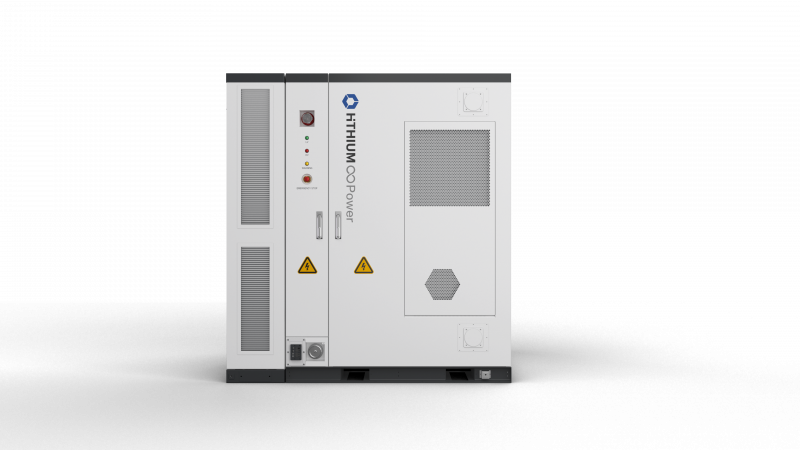
HiTHIUM's C&I portfolio uses LFP cells in the Block 125kW/261kWh all-in-one configuration, the Block 418kWh DC battery cabinet and the Power 1022kWh battery cabinet. External PCS arrangements can be coordinated with PCS manufacturers to match the project. Explore the HiTHIUM C&I battery storage product range and commercial and industrial energy storage solutions when comparing configurations.